Yila
Paid
Oct 09, 2026
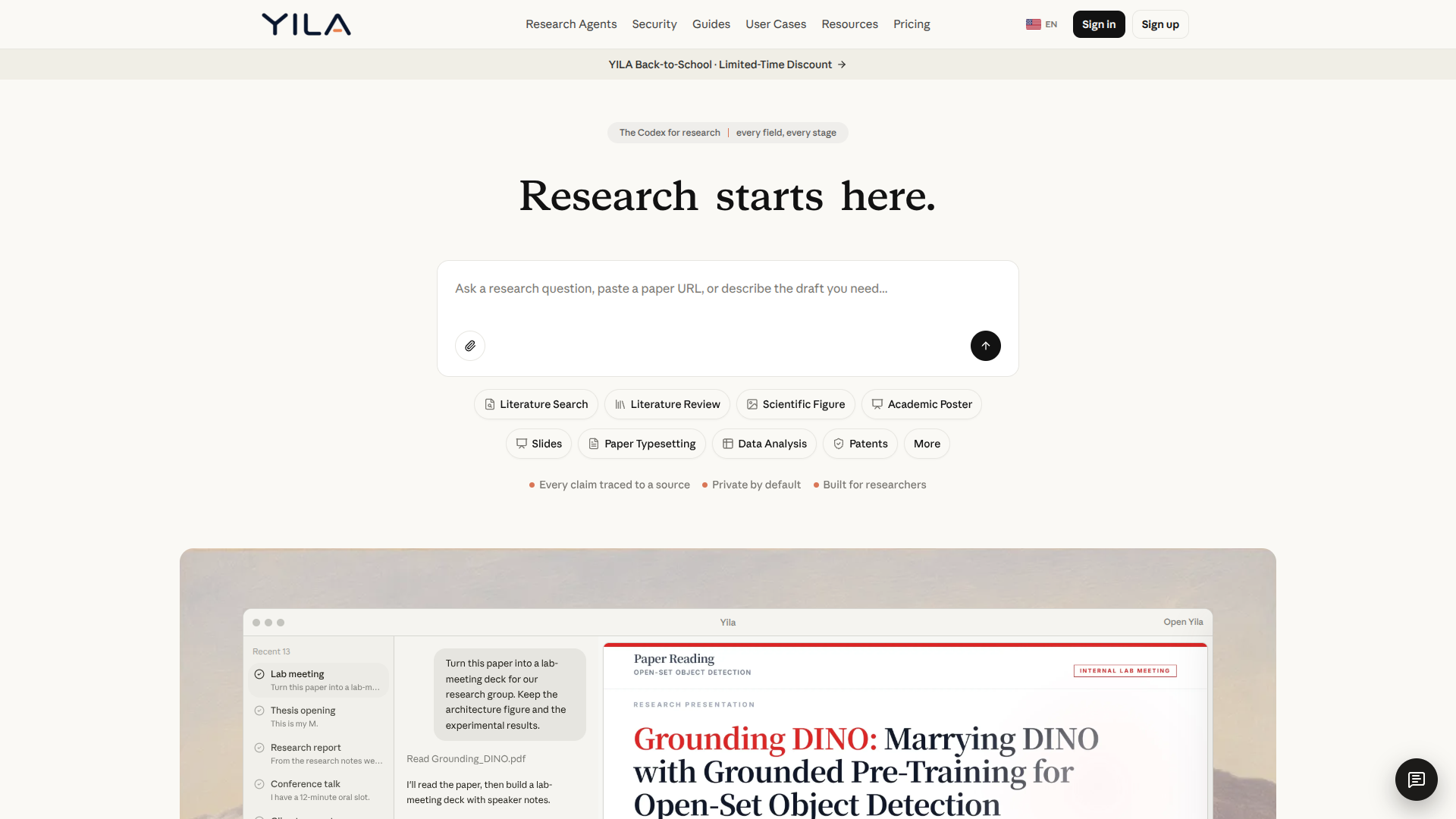
Sobre Yila
Agentes de pesquisa Yila apoiam leitura acadêmica, comparação de evidências, escrita com respaldo em citações, trabalho com dados, apresentações acadêmicas, navegador.
Resumo da IA
Yila é uma plataforma de agentes de pesquisa que auxilia acadêmicos e pesquisadores a transformar a leitura de artigos em insights acionáveis. Seus recursos incluem leitura assistida por IA, que destaca trechos relevantes e gera resumos automáticos; comparação de evidências entre múltiplas fontes, facilitando a identificação de consenso e divergências; redação com citações automáticas, garantindo conformidade com normas acadêmicas; suporte ao tratamento de dados, com visualizações e análises estatísticas integradas; criação de apresentações acadêmicas prontas para uso em conferências e seminários. Tudo isso ocorre dentro do navegador, sem necessidade de instalações adicionais. O público‑alvo compreende estudantes de pós‑graduação, professores, pesquisadores independentes e equipes de P&D que buscam acelerar o ciclo de revisão bibliográfica, aumentar a rigorosidade de suas argumentações, produzir materiais de alta qualidade com menos esforço. Yila entrega valor ao reduzir o tempo gasto em tarefas manuais, melhorar a precisão das referências e permitir que o foco se concentre na geração de conhecimento original.
Descricao Detalhada
Yila is an academic research workspace that connects reading, evidence organisation, writing, data exploration and presentation preparation. Its official site presents research agents for literature search, paper triage, bilingual reading, paper evidence cards and comparisons across sources. Writing tasks include citation-backed literature review and manuscript section preparation, while figures, posters and slides support later communication. A useful way to assess the product is to follow a small research question through those stages and inspect the material produced at each step. This description introduces the documented tasks without claiming a personal experiment, a measured productivity gain or a guaranteed academic result.
A question gives the workflow its direction. Before starting a search or asking for a draft, identify what needs to be understood and what material is already available. A broad subject can produce many sources without clarifying the point the work should investigate. A research agent can assist with finding and organising material, but the researcher decides the scope and the criteria for relevance. Keep that decision understandable rather than treating the quantity of output as a measure of usefulness. The same purpose should guide the reading set, the comparison of evidence and the later discussion, even if the scope changes as the sources are examined.
Yila lists literature search and paper triage as separate tasks. Search can help develop an initial reading set; triage concerns where closer reading is worth the attention. Those stages should be evaluated in relation to the actual question. A source may be useful background without providing appropriate support for a central claim. A research agent should therefore be assessed on the reasons for a suggested selection or priority, not on an assumption that the same ordering suits every project. Recording why material belongs in scope can also help a literature review explain its boundaries and make a later change to the reading set easier to justify.
The reading tasks provide a closer view of individual sources. The official product offering includes bilingual reading and a structured paper evidence card. These may help organise passages and information for further examination, but the original text should remain available when an interpretation matters. A research agent can assist with comprehension without becoming an independent authority for what the paper means. Check whether a statement is a direct report, a qualification or an interpretation introduced during summarisation. A literature review needs those distinctions to remain visible. Language support is part of the available workflow rather than a guarantee that every specialised nuance has been preserved in another language.
Evidence organisation then connects the individual sources with the question. Yila presents evidence cards and a multi-paper evidence matrix among its capabilities. A card can provide a working record for one paper, while a comparison can help examine related material together. Look at the context of each contribution before treating it as directly comparable with another source. A research agent is useful to evaluate when its organisation clarifies differences as well as similarities. A literature review can lose meaning if important distinctions disappear into a single summary. Return to the original passages to confirm the information that will carry an argument, rather than adopting a tidy comparison without checking what each source actually studied or reported.
Writing should follow the reviewed evidence. Yila lists citation-backed literature review and manuscript section workflows, giving users options for moving from notes and sources towards a draft. Begin with the argument a section needs to develop and decide which material is appropriate support. Examine proposed text for whether its claims remain within that evidence. A research agent can help organise language, but a citation beside a sentence does not establish the relationship automatically. Check the cited passage before accepting the attribution, and retain any qualification needed to describe the finding accurately. The final wording and interpretation remain the author's responsibility, including when an initial draft is produced through a software workflow.
Research planning and data tasks extend the offering beyond reading and writing. The official site describes research design, data exploration and analysis tasks that can begin from supplied material. These capabilities may support preparation or the examination of information, but they should be evaluated against the actual project. A research agent should not be treated as a reason to assume that every proposed method is suitable or every generated result scientifically valid. This directory description does not recommend a particular statistical test or present an unchecked analysis as evidence for a conclusion. The useful assessment is whether the task, the inputs and the proposed work can be inspected and understood in relation to the question being asked.
Communication is another stage that needs review. Yila includes scientific figures, academic posters and editable presentation slides among its documented workflows. A figure or slide should be compared with the material it represents, not judged only by how polished it appears. A research agent may support preparation, while the author decides what information the audience needs and which qualifications must remain attached to it. A literature review presented as a talk should preserve the distinctions that matter in the written discussion. Visual clarity is helpful when it improves understanding; it should not make an uncertain interpretation appear more definitive than the evidence allows. A manageable presentation task can be a useful part of evaluating whether the product fits a particular research workflow.
The product also lists journal polish and typesetting. These tasks concern the form of the writing rather than a promise of publication or editorial acceptance. Inspect proposed changes against the original meaning and the requirements of the intended outlet. Yila offers paid plans, and current access conditions should be checked on the official site before use. A research agent can be assessed through a defined task with clear expectations without inventing a price, quota or outcome claim. The same principle applies across the workflow: examine what has been produced, understand the source or input it depends on and decide whether it supports the purpose of the work.
Yila fits an academic research and productivity category because its documented tasks connect several kinds of work in a browser. It can be considered for developing a reading set, examining papers, organising comparisons, preparing citation-backed drafts and communicating results through figures or presentations. Begin with a small question and retain access to the original materials. The research agent can assist with the process, while researchers keep judgement over relevance, source quality, interpretation, citations and final outputs. No fabricated usage statistics, customer endorsements, measured time savings or guaranteed academic outcomes are claimed in this submission.
A question gives the workflow its direction. Before starting a search or asking for a draft, identify what needs to be understood and what material is already available. A broad subject can produce many sources without clarifying the point the work should investigate. A research agent can assist with finding and organising material, but the researcher decides the scope and the criteria for relevance. Keep that decision understandable rather than treating the quantity of output as a measure of usefulness. The same purpose should guide the reading set, the comparison of evidence and the later discussion, even if the scope changes as the sources are examined.
Yila lists literature search and paper triage as separate tasks. Search can help develop an initial reading set; triage concerns where closer reading is worth the attention. Those stages should be evaluated in relation to the actual question. A source may be useful background without providing appropriate support for a central claim. A research agent should therefore be assessed on the reasons for a suggested selection or priority, not on an assumption that the same ordering suits every project. Recording why material belongs in scope can also help a literature review explain its boundaries and make a later change to the reading set easier to justify.
The reading tasks provide a closer view of individual sources. The official product offering includes bilingual reading and a structured paper evidence card. These may help organise passages and information for further examination, but the original text should remain available when an interpretation matters. A research agent can assist with comprehension without becoming an independent authority for what the paper means. Check whether a statement is a direct report, a qualification or an interpretation introduced during summarisation. A literature review needs those distinctions to remain visible. Language support is part of the available workflow rather than a guarantee that every specialised nuance has been preserved in another language.
Evidence organisation then connects the individual sources with the question. Yila presents evidence cards and a multi-paper evidence matrix among its capabilities. A card can provide a working record for one paper, while a comparison can help examine related material together. Look at the context of each contribution before treating it as directly comparable with another source. A research agent is useful to evaluate when its organisation clarifies differences as well as similarities. A literature review can lose meaning if important distinctions disappear into a single summary. Return to the original passages to confirm the information that will carry an argument, rather than adopting a tidy comparison without checking what each source actually studied or reported.
Writing should follow the reviewed evidence. Yila lists citation-backed literature review and manuscript section workflows, giving users options for moving from notes and sources towards a draft. Begin with the argument a section needs to develop and decide which material is appropriate support. Examine proposed text for whether its claims remain within that evidence. A research agent can help organise language, but a citation beside a sentence does not establish the relationship automatically. Check the cited passage before accepting the attribution, and retain any qualification needed to describe the finding accurately. The final wording and interpretation remain the author's responsibility, including when an initial draft is produced through a software workflow.
Research planning and data tasks extend the offering beyond reading and writing. The official site describes research design, data exploration and analysis tasks that can begin from supplied material. These capabilities may support preparation or the examination of information, but they should be evaluated against the actual project. A research agent should not be treated as a reason to assume that every proposed method is suitable or every generated result scientifically valid. This directory description does not recommend a particular statistical test or present an unchecked analysis as evidence for a conclusion. The useful assessment is whether the task, the inputs and the proposed work can be inspected and understood in relation to the question being asked.
Communication is another stage that needs review. Yila includes scientific figures, academic posters and editable presentation slides among its documented workflows. A figure or slide should be compared with the material it represents, not judged only by how polished it appears. A research agent may support preparation, while the author decides what information the audience needs and which qualifications must remain attached to it. A literature review presented as a talk should preserve the distinctions that matter in the written discussion. Visual clarity is helpful when it improves understanding; it should not make an uncertain interpretation appear more definitive than the evidence allows. A manageable presentation task can be a useful part of evaluating whether the product fits a particular research workflow.
The product also lists journal polish and typesetting. These tasks concern the form of the writing rather than a promise of publication or editorial acceptance. Inspect proposed changes against the original meaning and the requirements of the intended outlet. Yila offers paid plans, and current access conditions should be checked on the official site before use. A research agent can be assessed through a defined task with clear expectations without inventing a price, quota or outcome claim. The same principle applies across the workflow: examine what has been produced, understand the source or input it depends on and decide whether it supports the purpose of the work.
Yila fits an academic research and productivity category because its documented tasks connect several kinds of work in a browser. It can be considered for developing a reading set, examining papers, organising comparisons, preparing citation-backed drafts and communicating results through figures or presentations. Begin with a small question and retain access to the original materials. The research agent can assist with the process, while researchers keep judgement over relevance, source quality, interpretation, citations and final outputs. No fabricated usage statistics, customer endorsements, measured time savings or guaranteed academic outcomes are claimed in this submission.
Principais Recursos
Leitura assistida por IA com destaque de trechos relevantes e geração automática de resumos
Comparação de evidências entre múltiplas fontes para identificar consenso e divergências
Geração automática de citações que garante conformidade com normas acadêmicas
Suporte a tratamento de dados com visualizações e análises estatísticas integradas
Criação de apresentações acadêmicas prontas para conferências e seminários
Funciona diretamente no navegador, sem necessidade de instalações adicionais
Videos
3
YouTube
Yila AI Review-Is There Anything Amazing About This Tool At ALL?? See (Check Before use)

YouTube
Episode 12: Cloudflare Ships Fast. Can Yila Outrun Codex?
YouTube
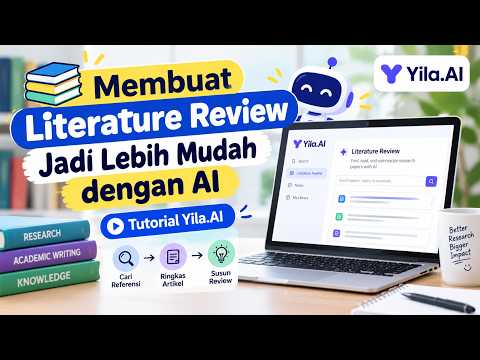
📚 Membuat Literature Review Jadi Lebih Mudah dengan AI | Tutorial Yila.AI
Comentarios 0
Participe da conversa
Entre para deixar um comentário e compartilhar seus pensamentos.
Related Ferramentas


Categorias
Discover More AI Ferramentas
Explore nossa coleção abrangente de ferramentas de IA.
Explorar TodasAvaliacoes
Carregando...
Loading reviews...

Nenhum comentário ainda
Seja o primeiro a compartilhar seus pensamentos e iniciar a conversa!